


 Destination Anywhere
Van water
Onboard Van Water Systems for Weekend Travel
Plan an installed van water system with fresh and gray tanks, pump, filtration, hot water, sink, and shower, plus an independent emergency reserve.
An onboard van water system brings a familiar daily routine into a small living space: turn on the faucet, fill a bottle, cook dinner, and wash up afterward. Its core is an installed fresh-water tank, a pump, suitable plumbing and fixtures, and separate gray-water storage. Filtration, hot water, and a shower should fit the way you travel and the maintenance you are willing to do.
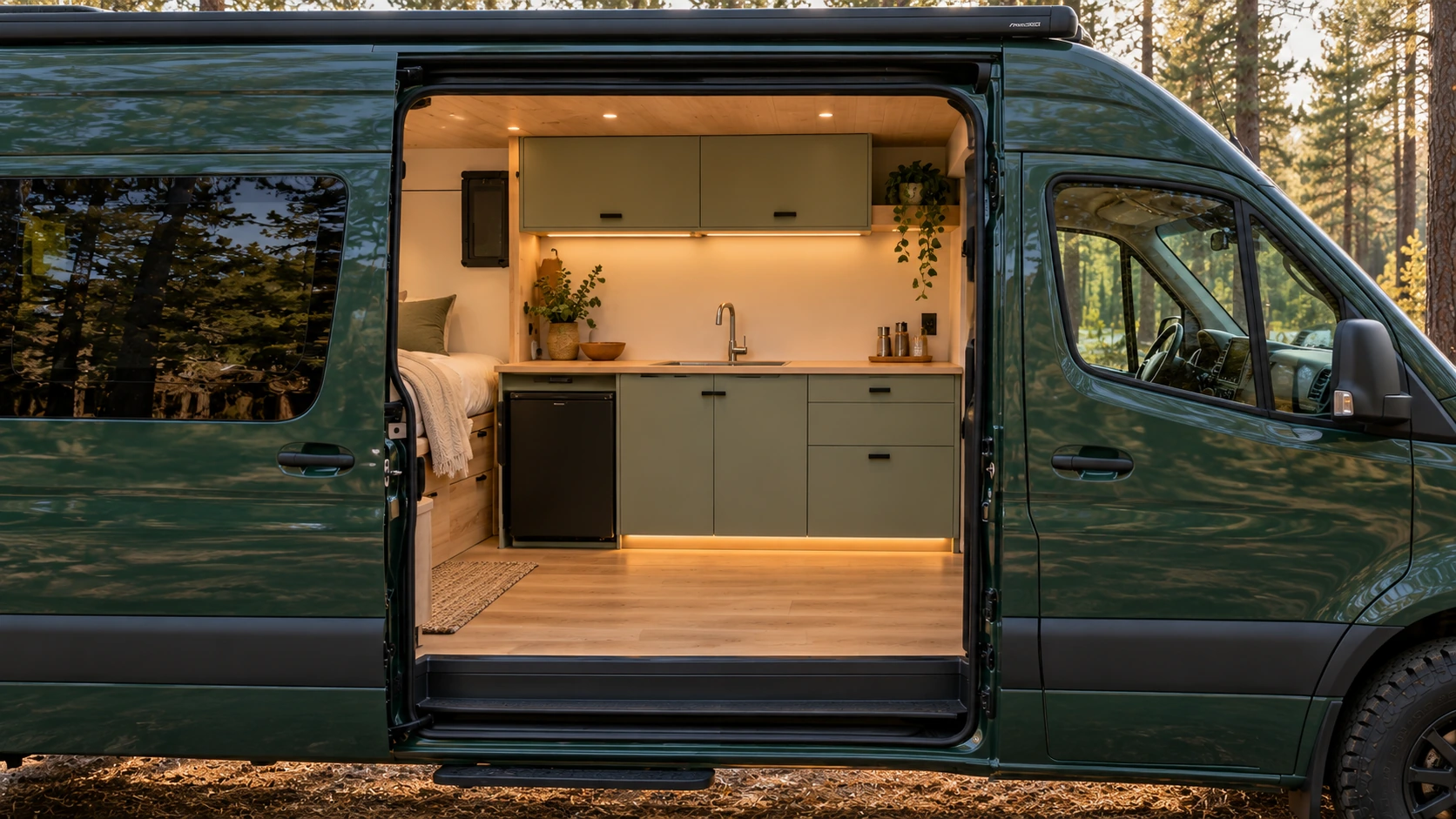
Start with the way you actually camp. How many people are traveling? Where can you refill? Will you use campground showers? Where can you empty the wastewater? Answer those questions before fitting the largest tank that will slide under the bed.
This guide is a planning overview. Installation details, electrical protection, operating pressures, sanitation procedures, and winterization steps belong to the manuals for your particular components and vehicle.
Work out a water budget
Try a home rehearsal before buying hardware. For one day, measure the water used for drinks, cooking, handwashing, dishes, and whatever washing routine you expect on the road. Include pets. Keep drinking needs separate from optional comforts so you can see where conservation actually helps.
Here is an illustrative weekend calculation, not a hydration recommendation or a promise of typical consumption. If two travelers measure a combined six gallons per day for their planned routine, two days require twelve gallons. If each person then adds one shower using two gallons, that becomes sixteen gallons before any separate reserve. A sink left running can make a careful estimate meaningless.
A US gallon of water weighs about 8.34 pounds. Twenty gallons therefore adds approximately 167 pounds before tanks, brackets, pump, and fittings. Count that load against the vehicle's carrying capacity, along with passengers and the rest of the build. USGS water conversion factors
Reserve water is a separate decision. CDC's emergency-storage guidance uses at least one gallon per person per day for three days, with more in some circumstances. That is an emergency baseline, not a complete van shower-and-dishwashing budget. Remote travel, heat, activity, pets, and an unreliable next refill call for more thought. CDC emergency water storage. Plan spare water.
Plan the installed tanks first
Choose fresh and gray tank locations together, alongside the bed, cabinets, and other equipment. A tank that fits an empty floor plan may become impossible to service after the furniture goes in. Leave space for its fittings and the access required by the supplier.
A fixed fresh-water tank needs a sensible fill point, drainage, service access, and a properly designed mounting arrangement. Draw the access path as carefully as the tank outline. Can you reach the connections without unloading the entire garage? Can you inspect a wet patch before it reaches the floor?
Use containers intended for drinking water, and never repurpose a vessel that held toxic chemicals. Keep potable water and wastewater clearly labeled and physically separate. Use a portable drinking-water container as an independent reserve or refill aid, rather than the center of this installed-system plan. Plan fresh water storage.
Make refilling a clean routine
Locate confirmed potable refill points before departure, then check seasonal availability. An autumn campground may still accept campers after its water service shuts off. A map pin alone does not establish that a tap is working or safe to drink from.
Carry a dedicated drinking-water hose and clean fittings in their own storage bag. Keep them away from disposal equipment. A rinse hose at a dump station should never become your fresh-water hose. Ask the operator when labeling is unclear rather than judging water by appearance.
A tank-fill inlet and a pressurized city-water connection do different jobs. Learn which your van has, and follow its manual for any regulator or backflow protection. This series deliberately avoids a universal pressure setting. Build a refill kit.
Decide how water reaches the sink
A gravity dispenser or manual pump can suit a simple weekend setup. A 12-volt demand pump gives a more familiar faucet experience, but it also introduces wiring, noise, and another component that needs access.
Match the pump to the complete system rather than shopping by the largest flow figure. Check compatibility with the faucet, filter, heater, and plumbing. Have the installation follow the specific pump's electrical and mounting instructions. Understand 12-volt pumps.
Keep the sink usable with a pot in it and the faucet reachable while you are cooking. A small removable wash basin can make water consumption easier to see. Scrape food into the trash before washing, and allow for the space occupied by the drain and wastewater container below. Choose a sink and faucet.
Know what a filter can do
Choose filtration around a defined problem. Better taste, sediment reduction, and protection against a particular contaminant are different goals. Check the exact cartridge's independently certified claims and replacement instructions, rather than relying on a general “purification” label.
A filter does not automatically make an unknown source drinkable. CDC notes that many household carbon filters are not designed to remove germs. Nor does clear, pleasant-tasting water establish safety. CDC choosing water filters
For this weekend setup, the simplest starting point is a verified potable source, clean storage, and maintenance you will actually perform. Read the filter explainer before using filtration as the reason to fill from somewhere questionable.
Add hot water and showers deliberately
Hot water is welcome on cold mornings, but account for its energy supply, operating requirements, service access, and winter care. Choose equipment approved for its intended location and installation. A qualified installer should handle requirements you cannot confidently meet, particularly combustion exhaust and fuel systems.
An outdoor shower also needs a wastewater plan. Decide where the runoff will go before choosing the showerhead. In some campgrounds, using a shower means capturing the water and carrying it to an approved disposal point. A shower tent provides privacy; it does not contain runoff.
Measure a test shower and include the result in both fresh-water and gray-water capacity. Read water heating options and outdoor shower planning.
Make gray water part of the design
Used sink and shower water needs its own container or tank. Plan how to notice a nearly full container, remove it without a spill, and empty it at an approved facility. Your next legal disposal stop matters as much as your next refill.
Biodegradable soap does not give permission to drain onto the ground. Neither does passing gray water through a screen or filter. Local land-manager and campground rules determine permitted disposal; keep runoff out of waterways and storm drains. Zion, for example, specifically requires collection and approved disposal of campground solar-shower gray water. Zion National Park superintendent compendium
The safest planning default is to collect it and use a facility that expressly accepts it. Plan gray water collection and disposal.
Keep the system serviceable
Write a short maintenance card with each component's model, manual, filter date, and sanitation instructions. A container-cleaning recipe is not automatically suitable for a complete system containing a pump, heater, seals, and cartridges. Read the cleaning and disinfection explainer.
Before freezing weather, use the component-specific winterization procedure. Truma's AquaGo guidance, for example, includes a bypass and drainage process and cautions against high-pressure air and antifreeze in the appliance. That is a good reason not to copy another van's routine blindly. Truma AquaGo winterization guidance
Before each departure, inspect accessible connections and the space below them, confirm the shutoffs are reachable, secure loose containers, and check both fresh and gray capacity. Carry an independent supply of drinking water. A system you can understand, inspect, and shut off is much easier to live with when the campsite is miles from a parts store.
Three useful follow-up reads
Before a shoulder-season trip, check freeze protection. Add simple leak checks to the departure routine, and learn how to read source-water advisories before your next refill.