


 Destination Anywhere
Van water
Planning an Onboard Fresh Water Tank
Choose an installed fresh-water tank with weight, mounting, refill access, drainage, and maintenance in mind.
Start with a full-size outline of the proposed tank and its fittings. Check it against the bed, cabinets, wheel arches, and the equipment that shares the space. Capacity matters, but a tank you cannot inspect or service is a frustrating foundation for an onboard system.
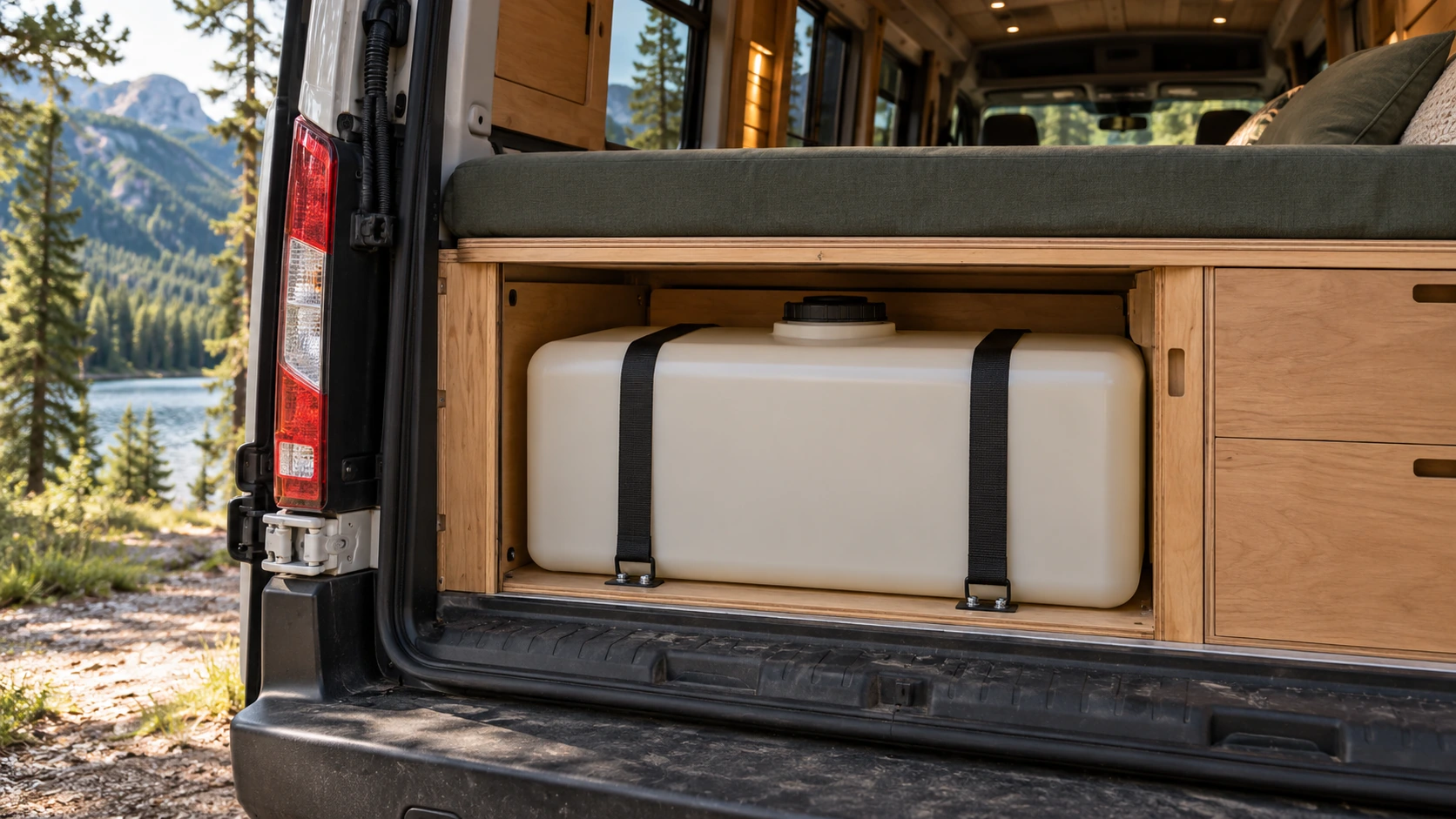
Ask the supplier about the tank's intended mounting, support, venting, fill, and drain arrangements. Have the mounting design account for a loaded moving vehicle; do not assume a thin cabinet panel is adequate restraint. Leave room to reach the connections and any service opening after the furniture is installed.
Choose a tank documented as suitable for drinking water. CDC advises food-grade storage and warns against reusing containers that held toxic chemicals. Keep the freshwater and gray-water systems clearly identified and separate. CDC emergency water storage
Capacity has a weight cost: ten US gallons of water is approximately 83 pounds before the tank and hardware. Include the water in the vehicle's payload calculation. USGS conversion factors
Plan drainage and seasonal care before installation, especially for equipment outside the heated interior. Reserve portable containers for useful supporting jobs: an independent drinking-water supply or carrying water from a tap the van cannot reach.
Return to the onboard water systems guide, or plan your refill kit.