


 Destination Anywhere
Trail gear
Winch sizing means checking the whole recovery system
Understand vehicle weight, rated pull, drum layers, power supply, and the limits of every connection before buying.
Choosing a winch starts with the vehicle, but it does not end with a weight multiplier. The useful question is whether a complete, correctly installed system suits your vehicle and intended travel. That system includes the mounting structure, electrical supply, line, fairlead, connectors, recovery points, and the person operating it.
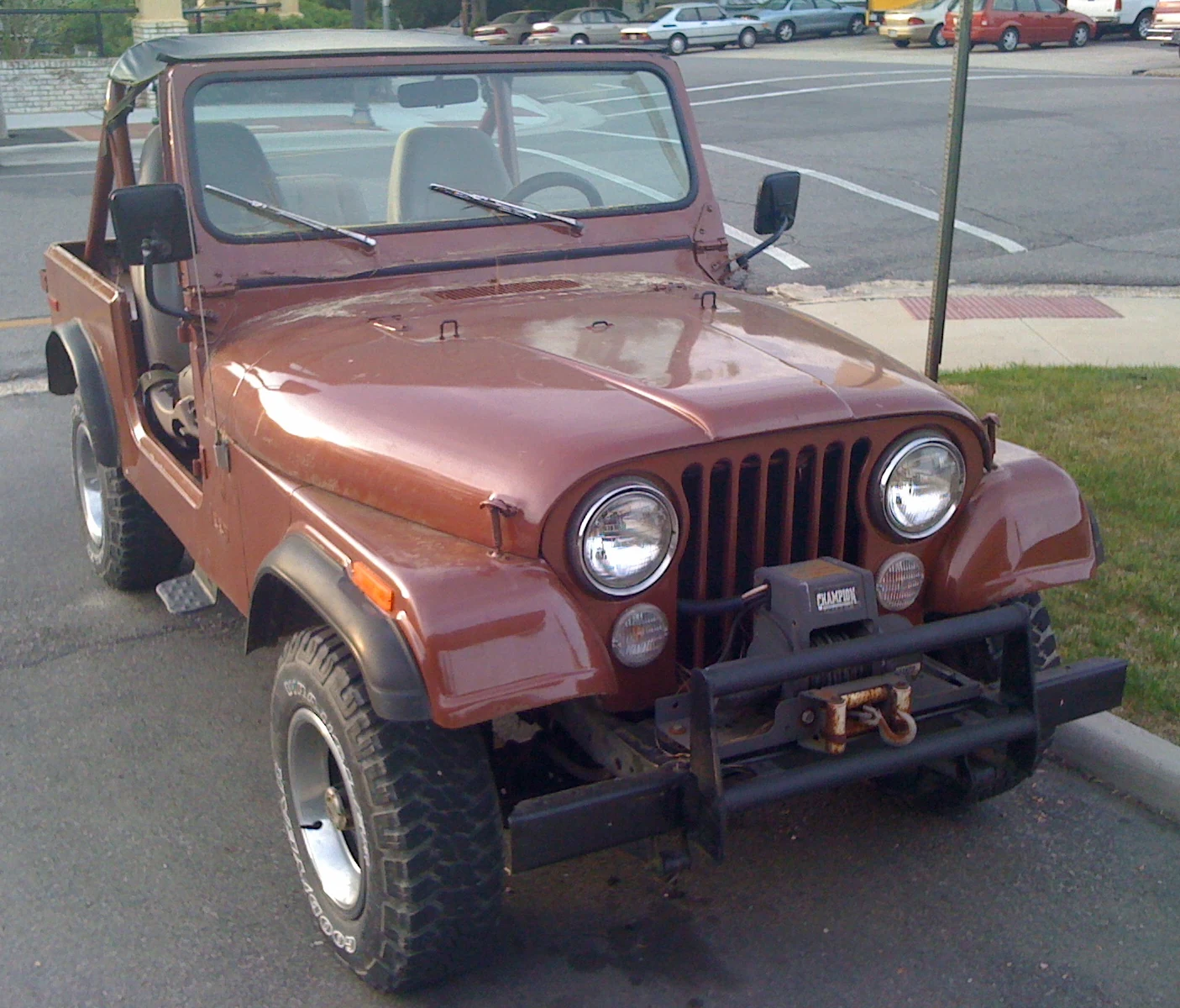

A bigger capacity number can be helpful within a compatible installation. It cannot establish the strength of an unknown anchor, overcome a poor electrical connection, or make an unstable vehicle safe to move. This guide is a buying and planning framework. It does not provide a rigging recipe or guarantee that a particular winch can recover a vehicle from every situation.
Separate the two vehicle weights
Actual loaded vehicle weight is what your vehicle weighs with its occupants, fuel, water, tools, accessories, and trip cargo. A suitable scale is more informative than an old brochure's curb-weight figure. Keep a dated record of the travel configuration so a later bumper, larger spare, or extra water does not disappear from the calculation.
GVWR, the gross vehicle weight rating, is the vehicle manufacturer's permitted maximum loaded weight. It is a rating, not a measurement of today's load. Weighing the vehicle helps you understand the load you actually travel with; it does not increase its GVWR or other vehicle limits.
WARN's published truck/SUV selection guidance uses GVWR multiplied by 1.5 as a minimum-capacity starting point. Treat that as that manufacturer's selection guidance and confirm the current instructions for your chosen application. Do not replace GVWR with a lower curb weight and claim to have followed the same method. WARN selection guidance.
As an illustrative calculation, a 6,000-pound GVWR multiplied by 1.5 is 9,000 pounds. This arithmetic does not certify any product or predict the force of a real recovery. You still need to check installation limits and the particular model's documentation. Other manufacturers or specialized applications may use different criteria.
Stuck weight is not a scale reading
A vehicle rolling freely on firm ground presents a different problem from one embedded in mud, resting on its underbody, or caught against an obstacle. Slope, tire condition, material around the vehicle, and the intended direction of movement affect the recovery. The resistance may also change abruptly as the vehicle moves.
You generally do not have a reliable trail measurement of that resistance. A simple multiplier should never be treated as permission to keep pulling until something gives. Before choosing a more powerful winch, consider the routes you intend to drive, access to qualified assistance, and how you will recognize a recovery beyond your training. Avoid buying for an imagined worst case that your mounting and rigging cannot safely support.
Read the line-pull rating by layer
A drum winch's rated pull typically refers to its first rope layer. Additional layers increase the effective drum radius, reducing available pulling force. WARN explicitly explains this loss with added layers. The headline rating therefore does not describe every moment of a short pull with most of the rope still on the drum. WARN layer explanation.
Compare the model's layer-by-layer performance data, rope capacity, and usable reach. Longer rope may offer reach, but simply packing more rope onto a drum does not create more pulling power. Rope diameter and allowable capacity are part of the design. Never change them casually.
Retain the minimum wraps required by the exact winch and rope instructions; the rope's drum attachment alone is not a substitute. Guidance can differ between products and line types, so this guide deliberately gives no universal wrap count. Ask the manufacturer when the winch and replacement-line instructions do not clearly agree.
Match the mount before increasing capacity
Physical fit and load capability are separate checks. The winch may fit between the bumper wings while the carrier, brackets, frame attachment, or mounting orientation is unsuitable. WARN distinguishes feet-down and feet-forward mounting architectures, and its vehicle-specific carriers have stated compatibility and capacity limits. Mount architecture, mount-system limits.
Get explicit confirmation for the complete vehicle, bumper or carrier, and winch combination. Follow specified fasteners, torque, and installation procedures. An adapter plate is not evidence that the underlying structure can withstand the load. Do not casually drill, weld, or modify a recovery mount to accommodate a larger product.
Also account for the added mass and where it sits on the vehicle. A winch purchase can affect payload, axle loading, clearance, access, and maintenance. A qualified installer should check the application rather than selling capacity in isolation. The price comparison should include all components and labor required for a sound installation.
Check electricity and heat
Compare current draw and line speed at relevant loads, not only an unloaded speed figure. Review the manufacturer's battery requirements, cable specifications, and installation instructions. WARN notes that both starting capability and battery reserve matter, and directs owners to the particular winch manual. WARN battery guidance.
A running engine does not make electrical capacity unlimited. Battery condition, charging performance, cable routing, and connection condition all deserve attention. Ask a qualified installer what the vehicle needs; do not assume every winch requires two batteries or that every stock system is sufficient.
Many recreational electric winches operate intermittently. Follow their duty-cycle and cooling instructions, and stop at required temperature or protection limits. Keeper explains that rest periods allow cooling and battery recovery. A thermal cutoff is a protective feature, not a signal to resume immediately or bypass the protection. Keeper duty-cycle guidance.
Match ratings rather than impressive numbers
Trace the intended load path through every component. Winch line, termination, fairlead, pulley if used, shackles, straps, vehicle recovery points, and anchor arrangements all need to suit their particular jobs. A system is constrained by its weakest applicable component and by any configuration-specific restriction.
Working load limit and minimum breaking strength are different terms. Breaking strength does not give permission to operate at that load. Do not invent a conversion factor or compare the two numbers as though their labels were interchangeable. Obtain the maker's application guidance when the documentation is unclear.
Keep stretchy kinetic recovery straps out of static winching arrangements. Confirm rope and connector compatibility, and inspect for damage before use. Never use a tow ball as a recovery attachment. These essentials also appear in the companion winch and recovery guide.
More rope parts change more than pulling power
A suitable multi-line system can trade speed and usable reach for mechanical advantage. It does not upgrade the winch's own rating or make every anchor load smaller. WARN's explanation introduces the trade-off; proper training is needed to apply it. WARN multi-line overview.
Crosby explains that the load on a block and its connecting fitting depends on line tension and the angle between the line sections. It can approach twice the line tension in an appropriate doubled-back arrangement. Real systems also have losses. This is why a pulley, connector, and anchor must be assessed for their actual loads, not merely selected to match the vehicle's weight. Crosby block-loading guidance.
Do not infer a complete safe arrangement from that principle. Multiple lines add connections and potential danger areas. Complex rigging, uncertain anchors, and unstable vehicles belong with trained recovery professionals.
Take these questions to the installer
Bring the vehicle's ratings and loaded weight, the intended mount, and a description of your usual travel. Ask for the compatible winch range, layer performance, electrical requirements, cooling limitations, approved line and connectors, and full installed cost. Request the manuals before purchase.
Leave room in the budget for training and inspection. A documented, maintained system within its limits is the goal. The correct stopping decision will still be part of every recovery, regardless of the number on the winch.
Keep building your kit
Trail Gear Winch Recovery · Trail Gear Snatch Straps · Trail Gear D Rings · Trail Gear Soft Shackles · Trail Gear Ropes · Trail Gear Guide