


 Destination Anywhere
Trail gear
Soft shackles need smooth compatible contact surfaces
Lightweight rope connectors reduce carried metal but still demand careful rigging.
A soft shackle is a purpose-made rope connector that closes around compatible recovery components. It is light, compact, and often easier to handle than steel hardware. It also behaves differently around edges, heat, abrasion, and tight bends, so it cannot be substituted everywhere a steel shackle has been used.
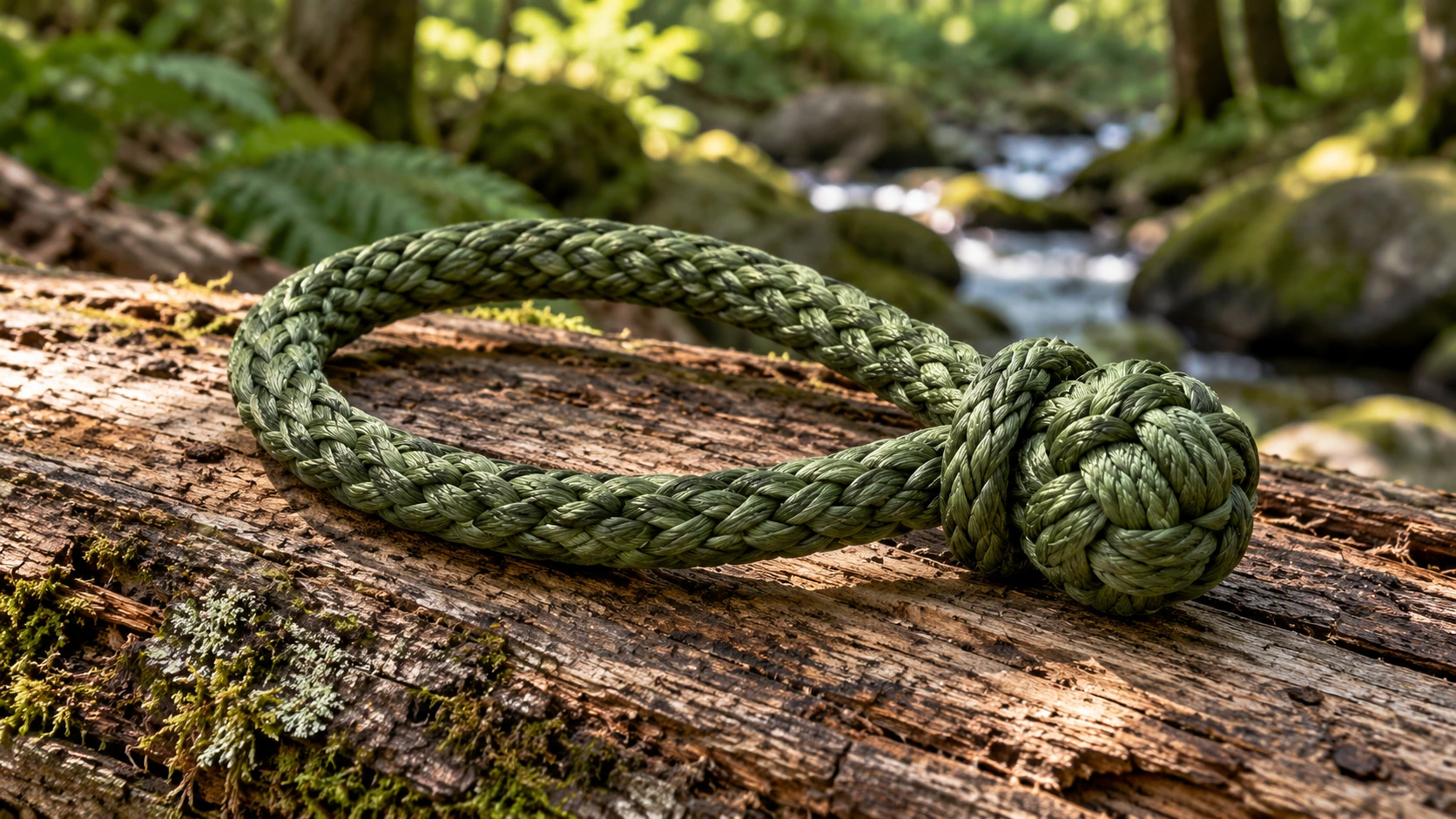
Read the manufacturer's instructions for the exact closure, orientation, contact geometry, and load rating. Check that the recovery point is suitable for soft-shackle use. Lift-It warns against attaching its soft shackles to sharp, rough, or square-edged objects. An apparently smooth painted opening may hide a damaging edge beneath the finish.
Inspect the full connector, including areas under any movable protective sleeve. Look for the maker's retirement indicators and keep identification readable. A sleeve can provide protection within a designed application; it does not make an incompatible attachment point safe. Do not tie an improvised knot or splice a damaged shackle to return it to service.
Budget decisions should include compatibility with the gear you already own. Buying several soft shackles is unnecessary if your current recovery points require a different solution. Practice opening and closing yours unloaded, with the manual nearby. During recovery, the whole line remains hazardous even when one metal connector has been removed. Keep everyone clear until tension is released and the recovery leader confirms it is safe to approach.
Keep building your kit
Trail Gear D Rings · Trail Gear Ropes · Trail Gear Guide