


 Destination Anywhere
Trail gear
Snatch straps require matching equipment and training
A kinetic recovery strap stores energy and must never be treated like ordinary rope.
A snatch strap stretches during a specifically planned vehicle recovery. That elasticity stores energy, which is released as the recovering vehicle pulls. It is different from a static tow strap or a winch extension. Similar colors and sewn loops do not make the products interchangeable.
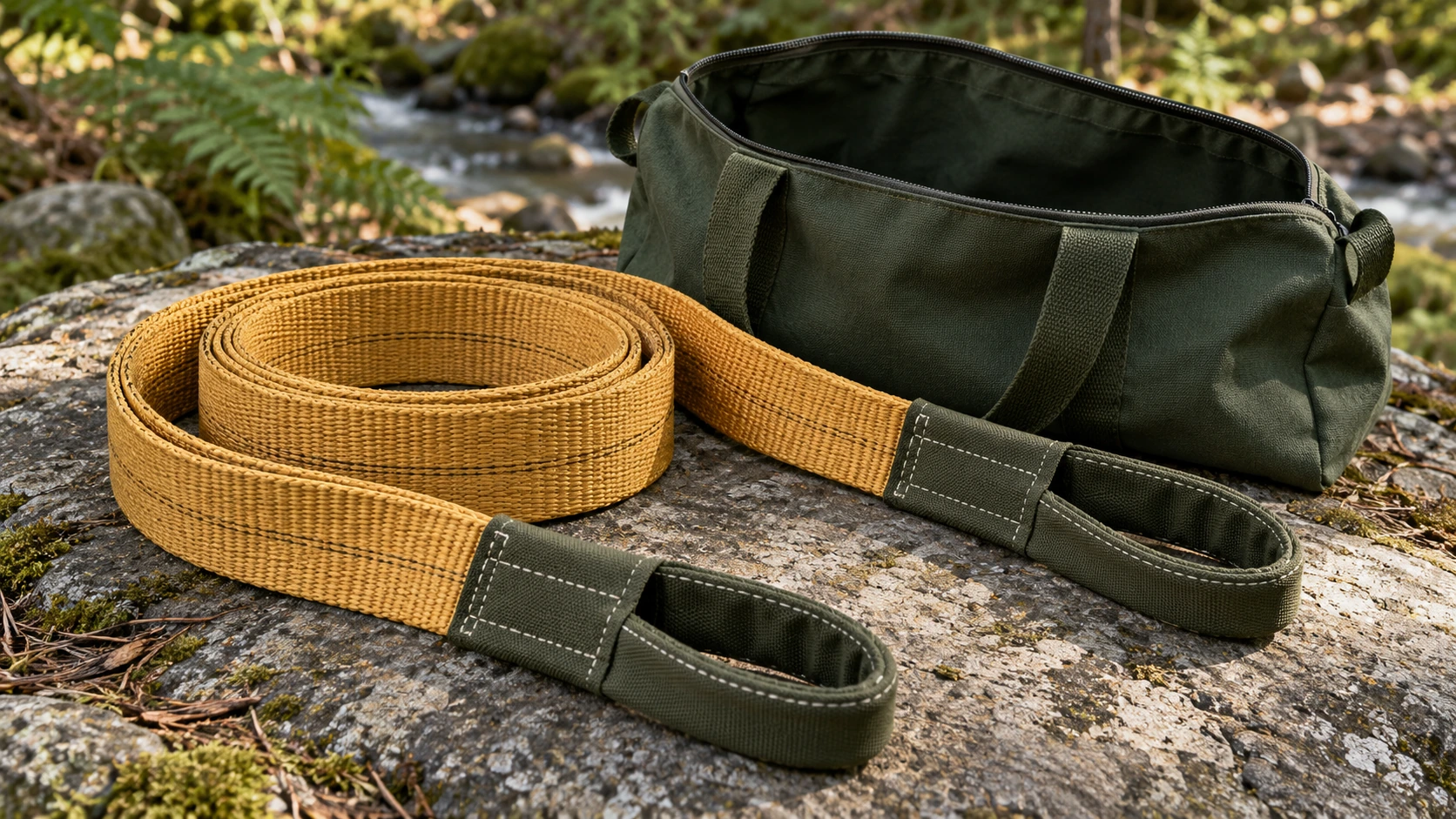
Choose the strap according to its manufacturer's vehicle-weight and application guidance. Bigger is not automatically better: a strap intended for a much heavier vehicle may not stretch as designed for a lighter pairing. Minimum breaking strength and working load limit are different measurements; the largest printed number is not a target load.
Both vehicles need suitable, rated recovery points and compatible connectors. Never attach a recovery strap to a tow ball. Keep bystanders well away from both vehicles, the line, and potential recoil paths. A failed attachment can become a projectile. Agree on communication and stop signals before anything moves.
This is equipment to learn with a qualified instructor, not a technique to copy from a short video while already stuck. Consider less energetic options before a kinetic recovery. Do not add a snatch strap to a winching arrangement as an improvised extension. Inspect the webbing, stitching, and loops; follow cleaning, rest-between-use, and retirement instructions. A strap with unknown history or unreadable identification is a poor bargain. Keep its label and instructions with the recovery kit.
Keep building your kit
Trail Gear Winch Recovery · Trail Gear D Rings · Trail Gear Soft Shackles · Trail Gear Guide