


 Destination Anywhere
Van electrical
Solar Charging for a Camper Van
Estimate seasonal energy yield instead of treating panel watts as a daily guarantee.
Roof solar can replenish a house battery while the van is parked. The useful question is how many watt-hours it will deliver on your route, in your season, with your parking habits.
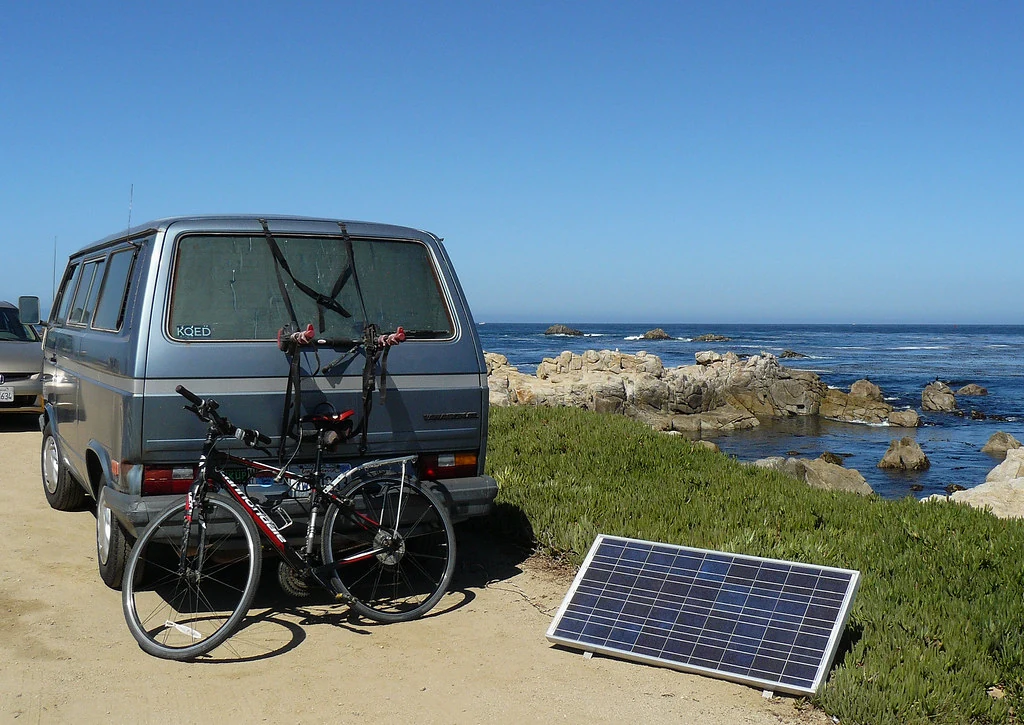
Panel watts describe rated power under specified test conditions. They are not daily energy. An illustrative 400 W array with four equivalent peak-sun hours and a 75% net yield gives 1,200 Wh per day. With two peak-sun hours, it gives 600 Wh. The yield factor here is a planning assumption covering losses, not a promised efficiency for a real system.
Peak-sun hours are equivalent full-strength sunlight hours, not the number of daylight hours. A shady campsite, roof equipment, snow, poor orientation, and local weather can all undermine a sunny-day estimate. Winter planning deserves a separate scenario rather than a summer average carried into December. US Department of Energy solar and winter weather.
Use destination-specific monthly information as a starting point. NREL's PVWatts estimates solar production by location and configuration, but its grid-connected calculations do not directly model a moving van, its changing shade, battery charging limits, or energy discarded when the battery is full. NREL PVWatts calculator.
For your own worksheet, compare a good day, a poor day, and a day with negligible solar. Decide what happens after two poor days: drive, connect to approved shore power, reduce loads, or change plans.
Budget for the controller, mounting, roof work, protection, and installation as well as panels. Have array voltage and controller compatibility checked for the expected temperatures.
Next: inverter sizing. Return to the van electrical guide.