


 Destination Anywhere
Van electrical
Sizing a Van Inverter
Check continuous output, starting demand, battery current, and the cost of leaving it on.
An inverter converts house-battery DC into AC for household-style appliances. Select one from the loads that must run together, then check the battery and installation can support that demand.
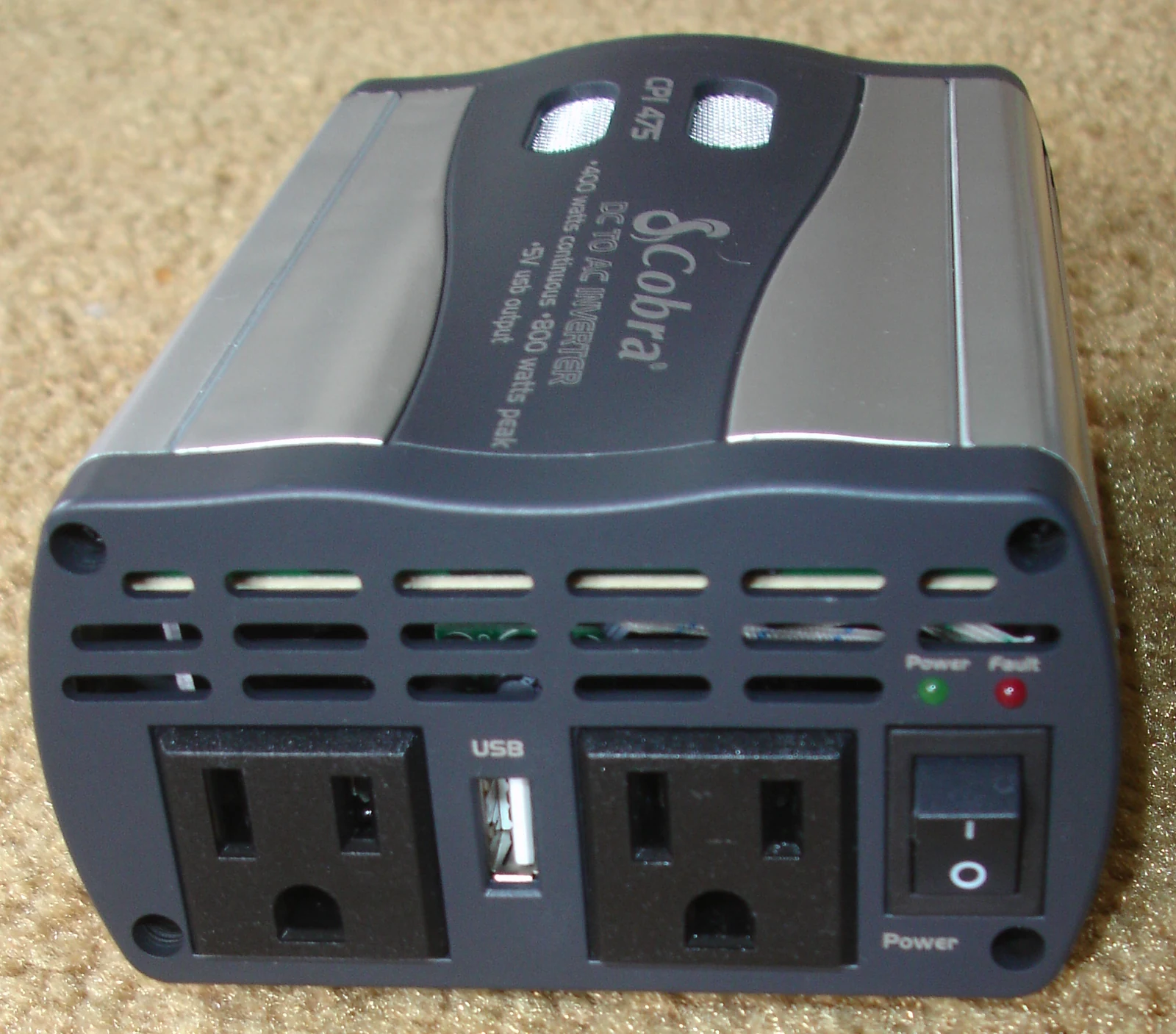

List continuous electrical input watts for each appliance. A hypothetical 1,200 W cooktop and 700 W kettle require 1,900 W when used simultaneously. Running them separately lowers the simultaneous requirement, but each cooking session still uses energy.
Motors and compressors may have a startup demand above their running draw. Match the appliance's requirement to the inverter's surge capability and permitted duration. Also check continuous output at the expected installation temperature. Manufacturer tables can distinguish VA, watts, peak output, temperature derating, and maximum efficiency; these are different specifications. Victron Inverter Smart specifications.
Battery-side current can be substantial. At an assumed 12.8 V and 90% conversion efficiency, a 1,500 W AC load requires approximately 130 A: 1,500 ÷ 0.90 ÷ 12.8. Real current changes with battery voltage and efficiency. That calculation is not a cable or fuse prescription.
Idle draw deserves its own line. An illustrative 8 W left on for 24 unloaded hours consumes 192 Wh. Turning the inverter off when unnecessary can help. Eco modes may behave differently with small or intermittent loads, so test the intended appliances. Victron inverter operating modes.
Ask a qualified installer to verify the entire power path, grounding and bonding arrangements, transfer behavior, and protective devices. Buy the inverter as part of that design.
Next: DC and AC component budgeting. Return to the van electrical guide.