


 Destination Anywhere
Van electrical
Refrigeration and Food Storage in a Van
Plan for safe food temperature and a full day of fridge energy.
A fridge is an ongoing load with a safety job. Size its power allowance around twenty-four-hour energy use under conditions resembling your trip, rather than multiplying its peak label watts by an arbitrary runtime.
.jpg)
For illustration, a fridge averaging 20 W across a complete day consumes 480 Wh. That is a chosen example, not a universal small-fridge rating. Cabinet temperature, setpoint, ventilation, door openings, and warm food added during the day affect real consumption. A freezer requirement also deserves its own measurement.
Compare DC compressor and AC options using total battery-side energy and installation requirements. An AC refrigerator may keep the inverter available around the clock, adding conversion and idle consumption. Confirm reliable startup and operation in any inverter energy-saving mode.
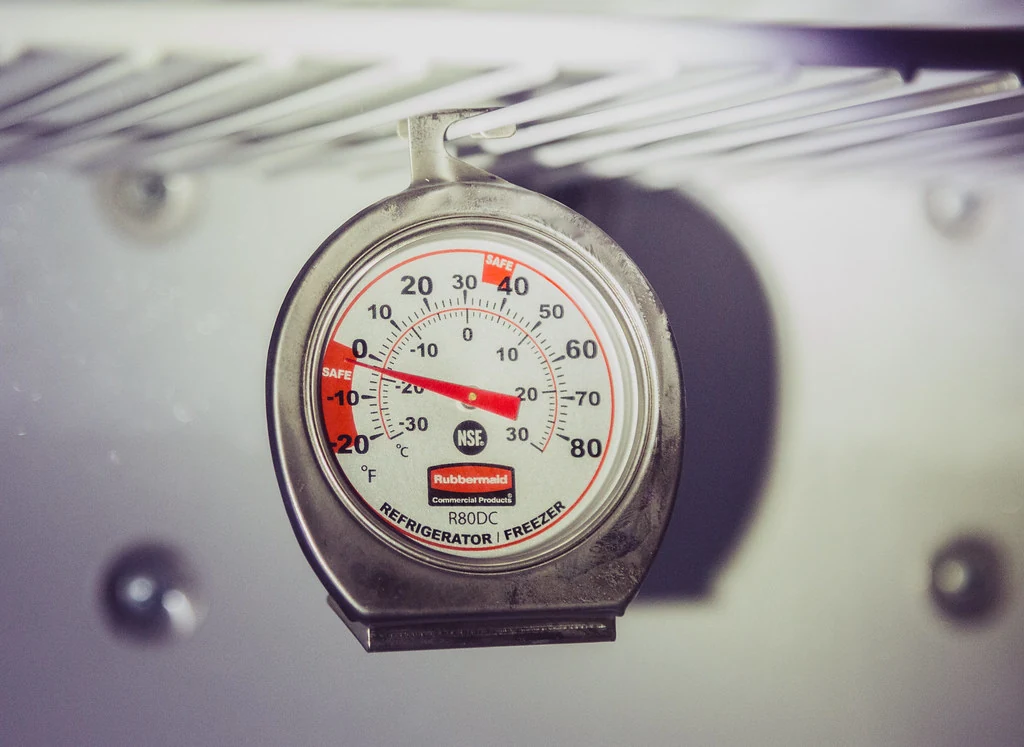
Food temperature comes first. USDA recommends a refrigerator temperature of 40°F or below and using an appliance thermometer to verify it. Do not assume the controller's display proves every food item is safely cold. USDA refrigeration and food safety.
A cooler can be practical for shorter trips when ice or frozen packs keep the contents cold. Pre-chill food, limit opening, keep raw foods contained, and have a replenishment plan. USDA's camping guidance also notes the tighter one-hour limit for perishables in temperatures above 90°F, rather than the usual two-hour limit. USDA food safety while camping.
Test the setup before a remote trip. Record actual daily Wh, check temperatures, and decide what you will do if battery power becomes scarce. Do not preserve entertainment power by allowing perishable food to warm unsafely.
Next: air conditioning. Return to the van electrical guide.