


 Destination Anywhere
Van electrical
The Battery Reality of Van Air Conditioning
Cooling comfort requires an honest overnight energy calculation and a backup plan.
Air conditioning can dominate a van's electrical design. Start with the exact unit's electrical input and expected runtime, then check whether the battery and next day's charging can support it.
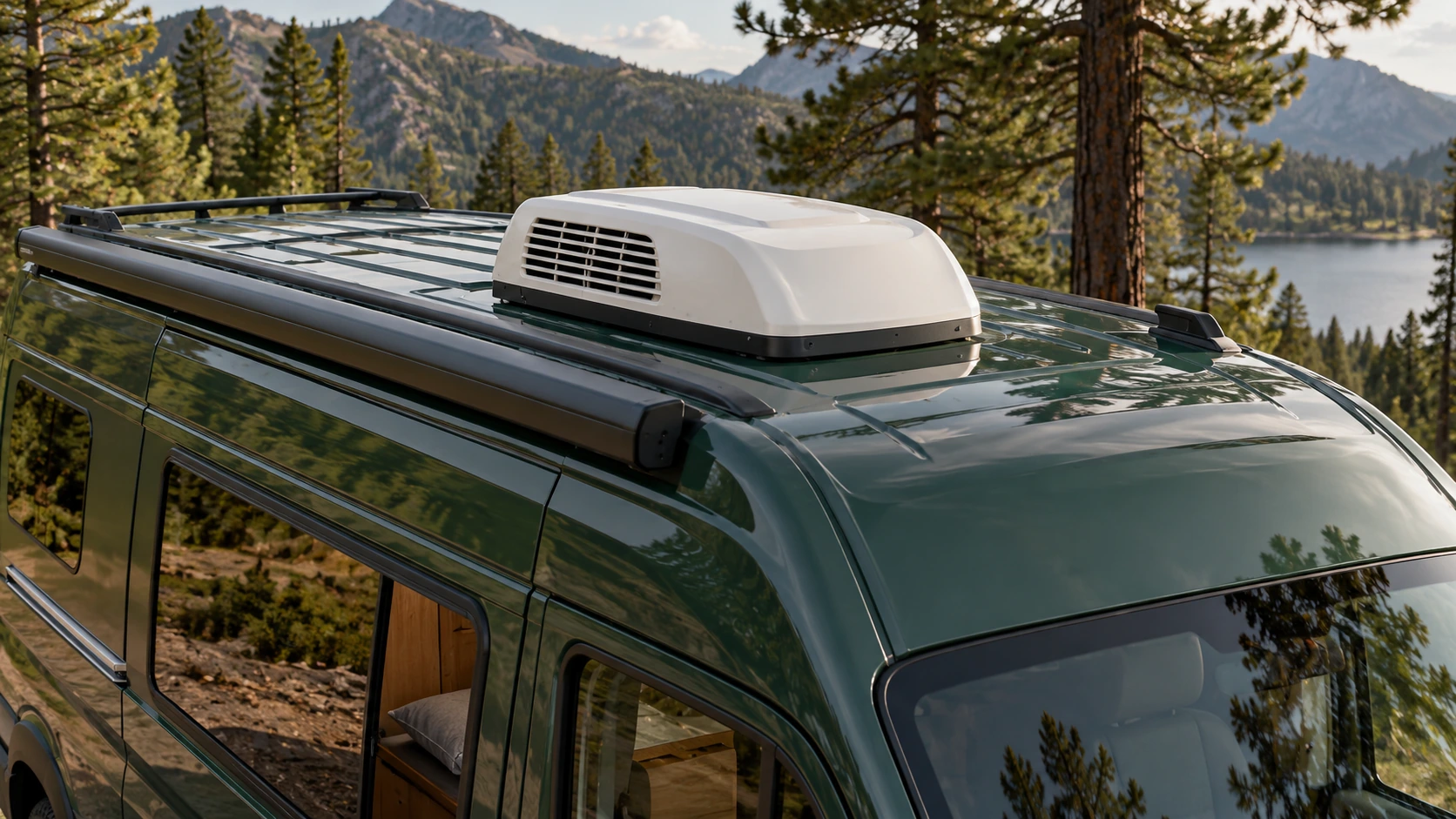
Cooling output and electrical input are different quantities. For example, Dometic describes its referenced RTX 2000 12V model's 1,700 W figure as cooling power. That is not a 1,700 W battery-consumption specification. Model variants and test conditions matter. Dometic CoolAir RTX 2000 12V product information.
Consider a separate hypothetical AC-powered unit averaging 800 W electrical input for six hours. It consumes 4,800 Wh at the appliance, or about 5,333 Wh at the battery with assumed 90% inverter efficiency. A nominal 12.8 V, 400 Ah bank contains 5,120 Wh; at an assumed 80% usable window it offers 4,096 Wh. It cannot cover that example night, even before other loads.
A DC air conditioner avoids an external AC-inverter conversion, but does not remove the cooling energy requirement. Do not apply the example's 90% factor to a DC unit unless it actually represents a conversion in that system.
Actual demand depends on weather, humidity, sun exposure, insulation, setpoint, and compressor behavior. A low-power mode's favorable conditions are not a guarantee for a hot overnight stay. Check startup requirements and operation as battery voltage falls.
Shade and ventilation may improve comfort but are not substitutes for reliable cooling when heat creates danger. Never rely on an unverified system to protect unattended people or pets. Plan access to safe temperatures if cooling fails.
Next: heating. Return to the van electrical guide.