


 Destination Anywhere
Trail gear
Tire repair gear and its limits
Carry inflation and repair equipment without confusing a trail fix with a safe permanent repair.
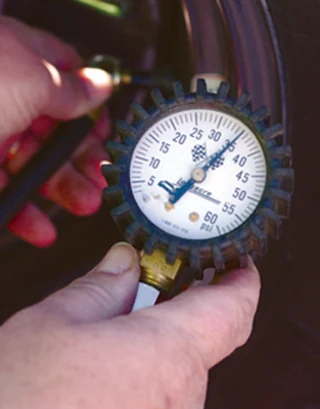
A tire-repair pouch belongs beside a reliable pressure gauge and an air compressor suited to your tires. The compressor needs a compatible power connection, enough hose reach, and operating instructions you have tried before leaving pavement. Check its duty-cycle limits so a long inflation job does not become a second breakdown.

A plug kit may be marketed for emergency use, but an outside-only plug cannot reveal damage inside a tire. USTMA says a proper repair requires removal from the wheel and internal inspection, with both the injury filled and the inner liner sealed. Shoulder and sidewall injuries are outside its repairable area. A tire driven seriously underinflated may have additional damage even when the hole looks small.
On the trail, stop and assess the loss rather than repeatedly adding air and hoping. Follow the tire and repair-product instructions; when damage, air retention, or repairability is uncertain, use a serviceable spare or arrange recovery. Never promise that a plug makes a tire safe for highway travel.
Practice connecting the inflator and reading the gauge at home. Store repair materials within their stated shelf life. There is no pressure number that suits every loaded vehicle, tire, wheel, and surface. Use vehicle and tire guidance, and restore the appropriate road pressure before normal road travel.
Keep building your kit
Trail Gear Wheel Replacement · Trail Gear Jacks · Trail Gear Guide