


 Destination Anywhere
Trail gear
Jumper cables need a compatible donor and a known procedure
Check both vehicle manuals before connecting a battery.
Jumper cables connect a suitable donor source to the starting system of a vehicle whose battery needs assistance. They are useful only when the vehicles, voltage, connection points, and manufacturer procedures are compatible. Modern hybrids and electric vehicles can have specific restrictions, and a high-voltage traction battery is not a jump-start connection.
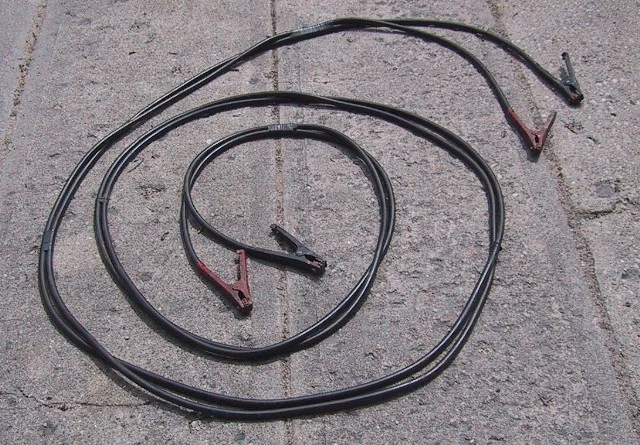

Carry cables sized and rated for the intended application, with sound insulation and clamps that can reach the approved points. Check the complete length for cracks, exposed conductors, heat damage, or loose connections. Store them so they cannot rub through on tools or sharp cargo.
Read both vehicle manuals before connecting anything. Use the specified terminals or remote jump points, connection sequence, and removal sequence. Keep clamps from touching unintentionally and cables away from moving fans or belts. Do not attempt to jump a battery that is leaking, damaged, or suspected to be frozen; get qualified assistance.
The trail limitation is simple: cables need an appropriate second vehicle or other approved power source. Traveling alone may justify a compatible booster as well, but neither tool fixes a charging-system fault or a damaged battery. After a successful start, investigate why assistance was needed before continuing into a more remote section. Affordable, well-made cables and a saved copy of the exact procedure are a better starting point than guessing with whatever is nearby.
Keep building your kit
Trail Gear Battery Booster · Trail Gear General Tools · Trail Gear Guide