


 Destination Anywhere
Van electrical
House Battery Types and Usable Capacity
Convert amp-hours into usable energy before comparing battery banks.
A house battery stores energy for camping loads. Its chemistry is only one part of the decision: usable capacity, current limits, temperature protection, weight, mounting, serviceability, and charging compatibility also matter.
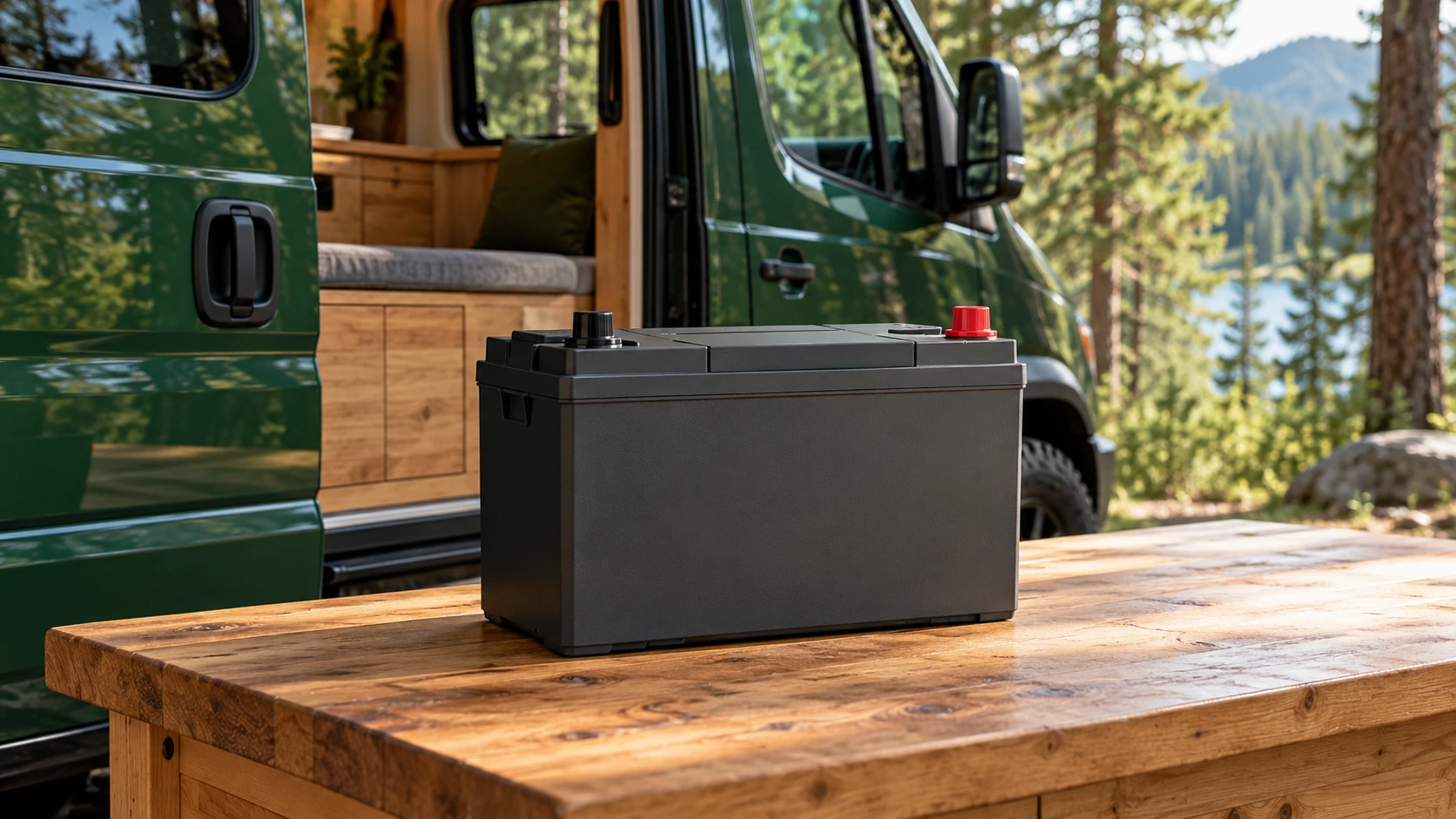
Flooded lead-acid and AGM are deep-cycle options. Flooded batteries require attention to their specified maintenance and installation needs; AGM construction avoids routine watering. A starting battery serves a different job from a deep-cycle house bank. Trojan deep cycle battery selection; Trojan AGM maintenance and charging.
For any chemistry, convert Ah to approximate nominal Wh using nominal voltage. A 12.8 V, 200 Ah battery contains about 2,560 Wh. If the planning assumption is an 80% usable operating window, that becomes 2,048 Wh. Those percentages are chosen examples, not universal limits for lithium or lead-acid. Check the exact manufacturer's discharge guidance, warranty, and capacity test conditions.
Energy capacity also does not establish output capability. A battery can have enough Wh for a meal yet have a battery management system that cannot supply the cooktop's instantaneous current through an inverter.
LiFePO4 charging requires particular attention in cold weather. Do not charge below the manufacturer's allowed cell temperature unless its approved heating and control arrangement permits it. For example, Victron's referenced Lithium NG manual allows charging only between +5°C and +50°C; other batteries have their own limits. Victron Lithium NG operating limits.
Build in reserve for weather, aging, and unplanned loads. Then check whether your chargers can replenish the planned withdrawal during the trip.
Next: solar charging. Return to the van electrical guide.