


 Destination Anywhere
Van electrical
DC to DC Charging While You Drive
Match vehicle charging to the alternator, battery, and trips you actually take.
A DC-to-DC charger takes power from the vehicle electrical system and manages charging for the house battery. A suitable unit can regulate current and follow the battery's required charging profile. Compatibility with the vehicle's alternator behavior matters, especially with variable-voltage systems. Victron Orion XS charging overview.
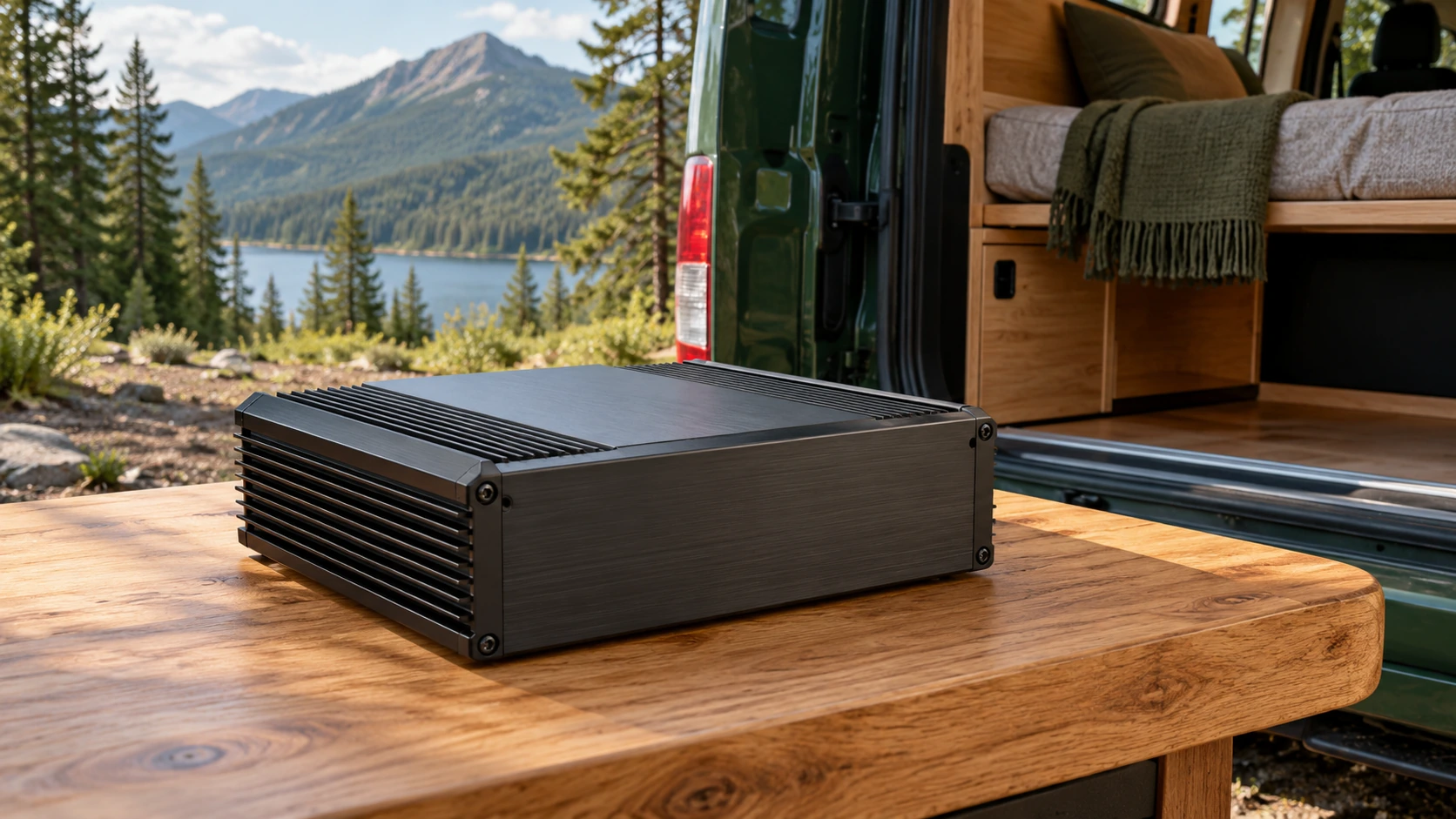
Start with the driving schedule. If you spend days parked, a powerful charger may get few opportunities to help. If you relocate most mornings, driving can be a useful part of the charging plan.
For a transparent example, suppose the charger delivers an average 30 A at 14 V for two hours. Output energy is 30 × 14 × 2 = 840 Wh. That is energy delivered at the charger output, not a guarantee of 840 Wh stored: running house loads and charging losses reduce the net addition. Current may also taper or be limited.
Have the vehicle and charger requirements checked together. Alternator nameplate output is not all available to the camper. The vehicle needs power too, and hot operation or low engine speed can change the available margin. An adjustable input limit is useful; it does not decide the safe limit for your vehicle. Victron Orion XS current limiting.
Ask the installer how charging stops when the engine is off, how the starter battery is protected, and how battery temperature limits reach this charging source. Include compatible cables, protection, mounting, and labor in the quote. Avoid buying by amp rating alone.
Next: house battery capacity. Return to the van electrical guide.