


 Destination Anywhere
Camping gear
Choosing a Camping Tent
Check floor space and practice the pitch before trusting the capacity label.
A tent should fit the people and sleeping equipment going inside it. Before buying, compare its floor dimensions with your actual pads. Account for tapered corners, sloping walls, and space to move. A two-person label does not promise room for two wide mattresses and a pile of bags.
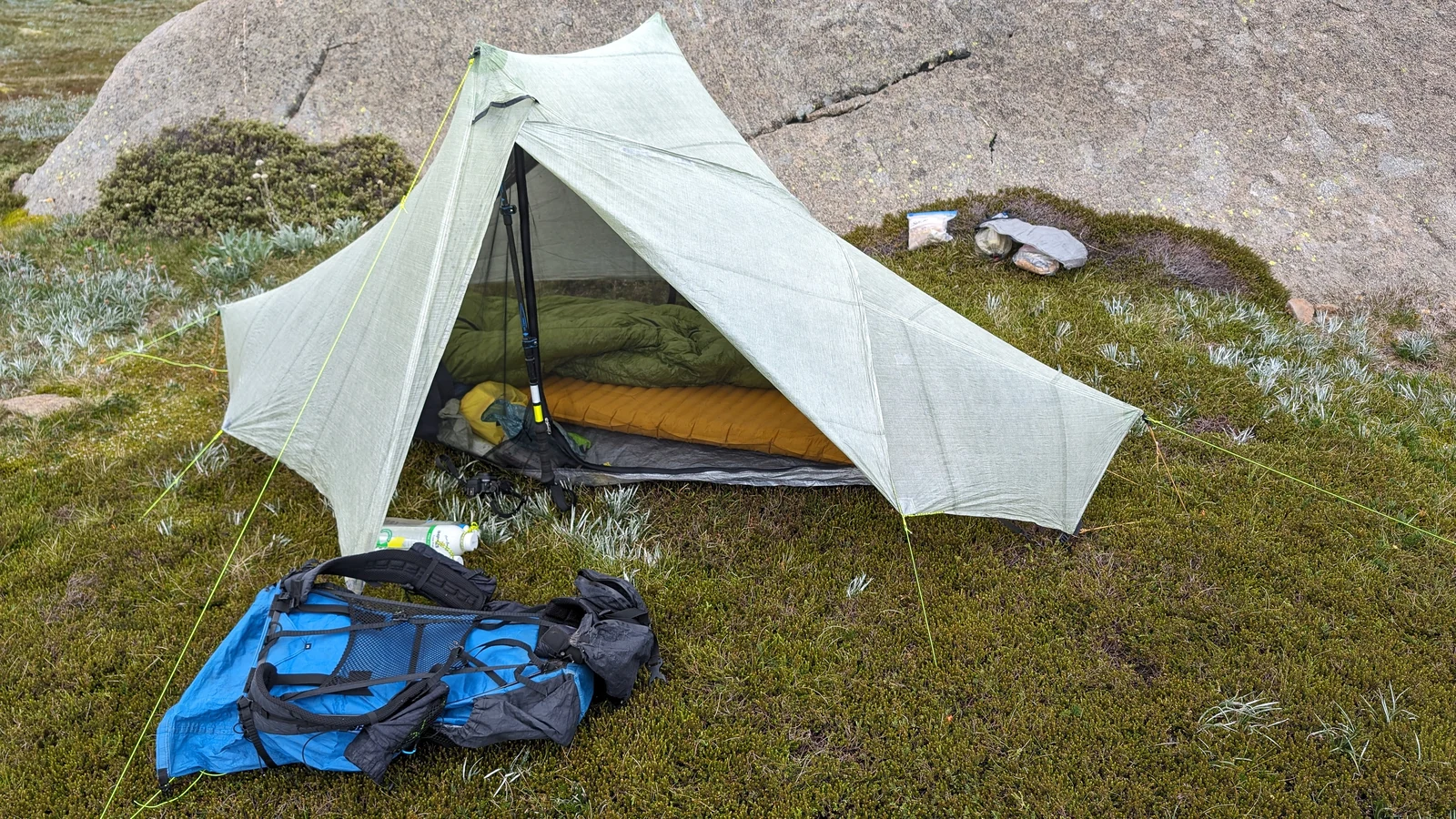
For car camping, you may reasonably prioritize room and easy setup over the smallest packed size. Check the packed tent against your vehicle space, though. A tall tent that feels wonderful at camp still has to get there.
Borrowing or renting is a useful way to learn what you like. Whether the tent is new or borrowed, pitch it at home with the rainfly and all required guy lines. Check poles, stakes, zippers, and attachment points. Follow the manufacturer's instructions rather than assuming every tent goes together the same way.
At camp, use designated tent areas where provided. Avoid low ground that collects water and overhead dead limbs. Keep the tent away from cooking and fire areas according to site rules. If you use a groundsheet, it should not stick out and collect rain beneath the tent. NPS campsite planning
Leave ventilation openings usable and pack the shelter dry after the trip, following its care instructions. Finish the bed with a suitable sleeping bag and sleeping pad. Return to the complete gear guide for the rest of camp.