


 Destination Anywhere
Van electrical
Shore Power for a Camper Van
Use campground electricity as a planned power source with a professionally reviewed connection.
Shore power is external AC supplied to the van through a suitable installed system. It can support appliances and compatible battery charging, making it an important option for high-demand trips and extended poor weather.
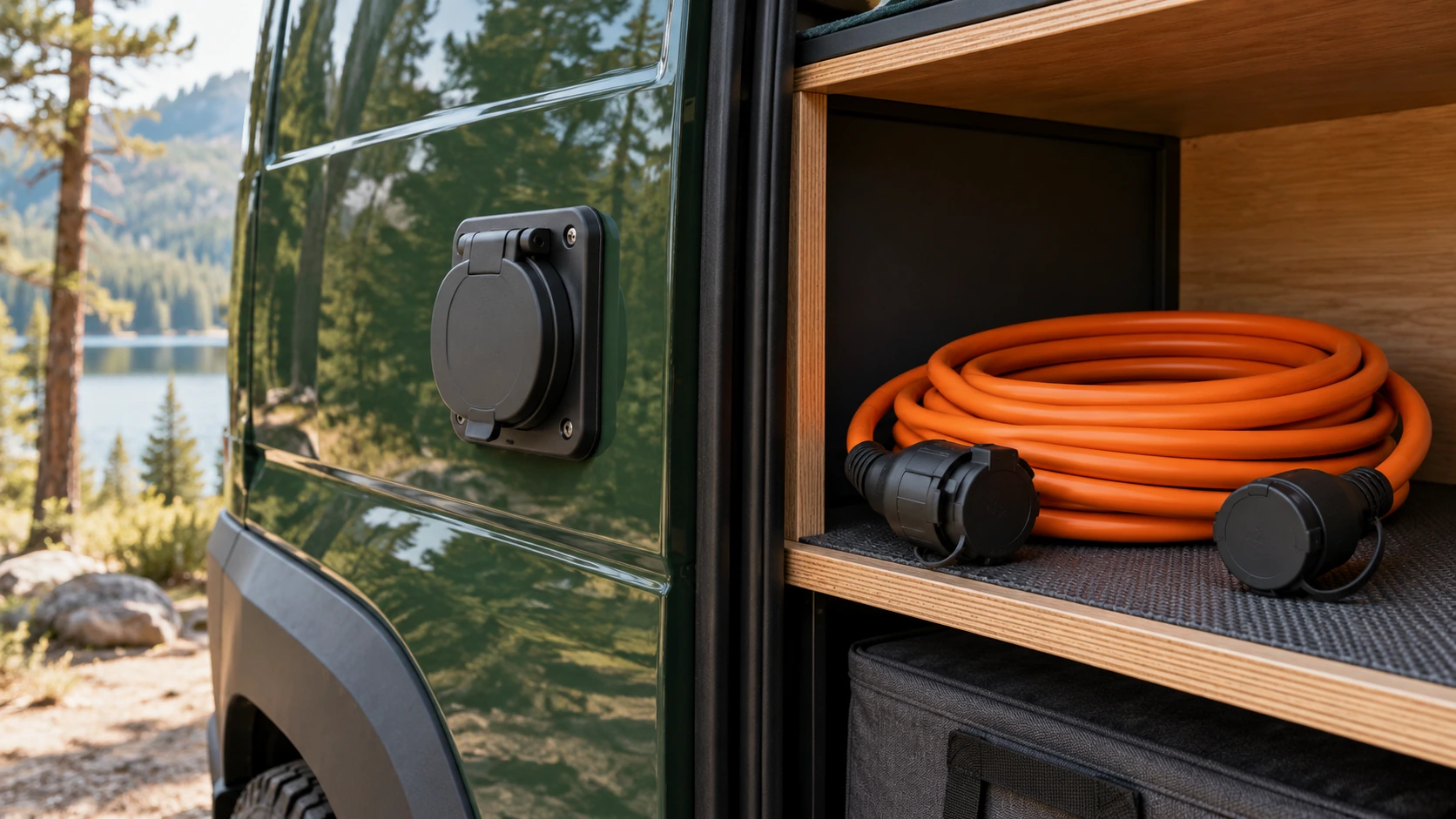
Begin with the campsite supply and the van's actual input limits. An outlet adapter changes the connection format; it does not increase the source's capacity or make incompatible voltages safe. Ask the installer to explain which outlets and cords your system can use and how its input limit should be set.
Include battery charging in the demand calculation. A charger can draw meaningful power while appliances are running, so a cooking plan that works on inverter power may still exceed a limited campsite supply when charging is added.
Request a complete system review covering the inlet, cord, AC distribution, overcurrent protection, shock protection, transfer equipment, and grounding and bonding for each operating mode. Victron's AC guidance discusses overload protection and the need to match protection to the installation; it is background, not a substitute for a U.S. vehicle-specific design. Victron AC wiring and shore supply guidance.
Before departure, have the installer demonstrate connection, disconnection, normal operation, and what to do when a protective device trips. Never bypass a protective device to keep an appliance running, and never improvise a backfeed connection.
For budgeting, compare occasional paid hookups with the installed cost and charging demands of a larger off-grid system. The best choice depends on where you camp.
Return to the van electrical guide.