


 Destination Anywhere
Van electrical
A One Day Van Energy Audit
Replace appliance guesses with a measured daily energy plan.
An energy audit turns an equipment wish list into a usable power budget. Start with a normal day and then build separate hot-weather, cold-weather, and parked-workday versions.
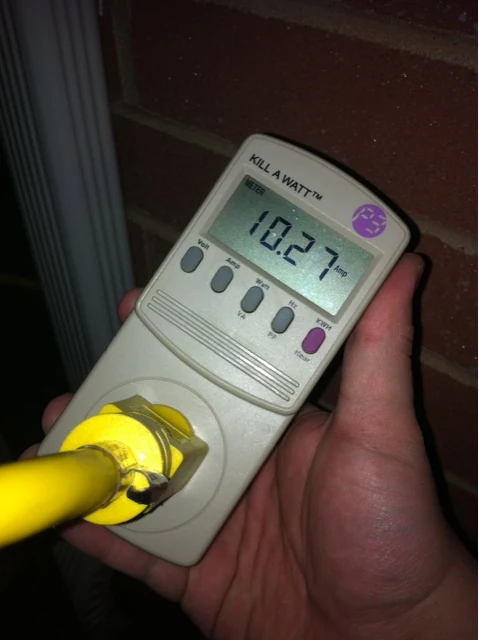

For each load, record the power source, measured average watts or watt-hours, hours of use, and whether it overlaps with other large loads. Keep maximum watts for equipment sizing and daily Wh for energy sizing. A charger label is not a measurement of an entire workday.
Use one boundary consistently. If you measure a laptop on the AC side, allow for inverter losses before combining it with battery-side entries. If a battery monitor already includes those losses, do not add them a second time. The same principle applies to converter losses and idle loads.
This series' illustrative day adds 480 + 120 + 40 + 12 + 60 + 200 + 72 = 984 Wh. Two days equal 1,968 Wh; an additional 20% planning margin gives 2,361.6 Wh. The margin is an editorial example, not a safety standard or guaranteed reserve.
Record charging separately. Energy arriving from a charger is not necessarily all stored when the fridge and other loads are operating. Test a realistic driving period and a parked day rather than assuming continuous nameplate output.
Finish with three questions: How many days must the battery bridge? What replenishes it after those days? Which loads can be reduced without compromising safety? Revisit the audit when you add equipment or change seasons.
See the worked example and inverter specification distinctions.