


 Destination Anywhere
Van electrical
Portable Power Station or Permanent Van Battery System
Compare a Jackery-style standalone setup, a built-in house system, and a practical hybrid against your actual loads.
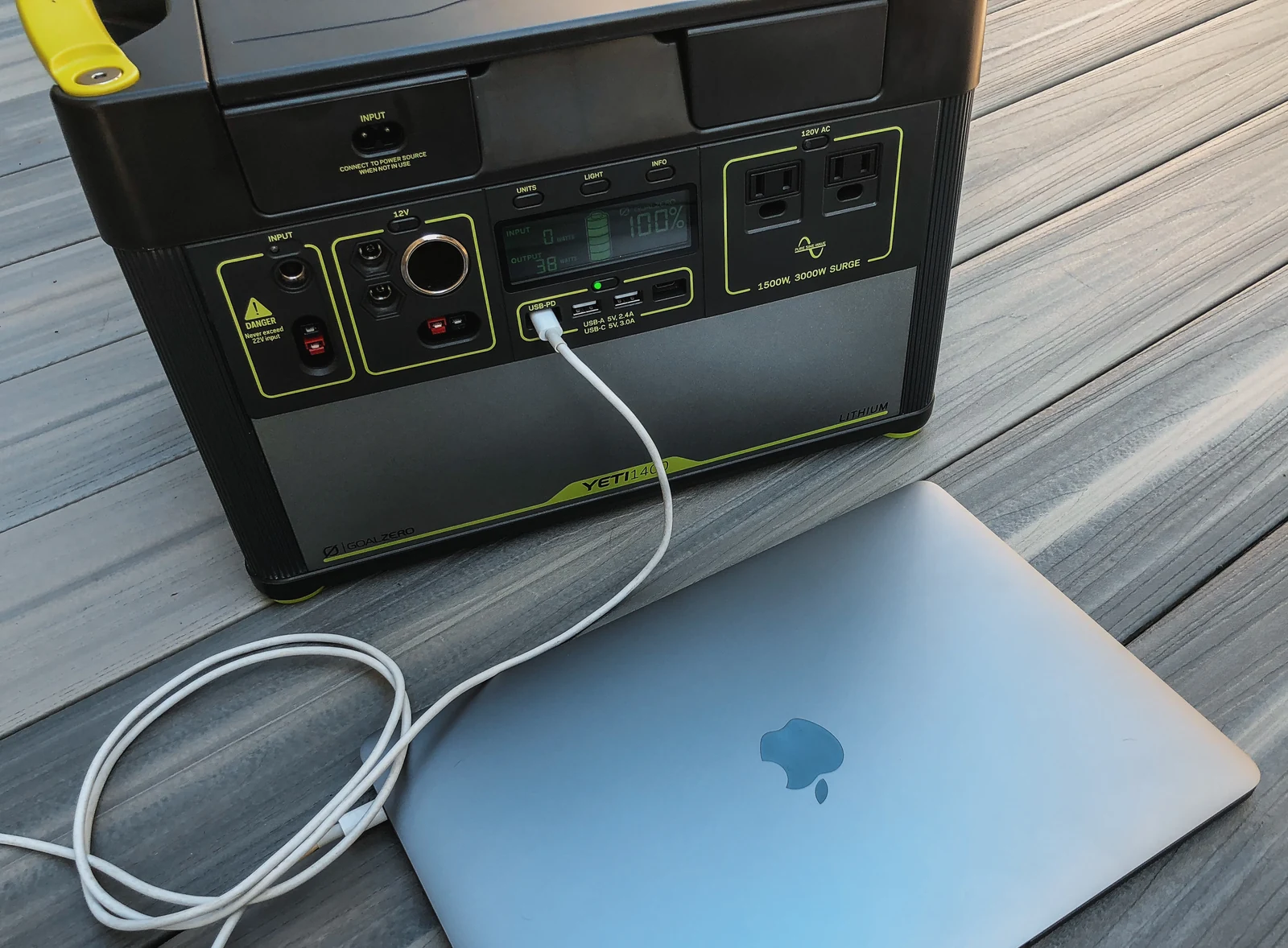
A standalone power station can be an advantageous choice for a simple van. It packages storage and power electronics into a removable unit, reduces the number of components you must select, and lets the same equipment serve camp, another vehicle, or a suitable home use. A permanent battery system makes more sense when the van needs extensive built-in power and a charging plan tailored to daily living.
_(43467687445).jpg)
TreXcursion's grab-and-go camp kitchen provides a relevant Explorer 1500 example. Treat that setup as a modest-load, simple-build reference. Its role does not establish that every Jackery is small, that later 1500 variants share its specifications, or that one portable unit suits every van. Identify the exact model and region before comparing manuals.
Compare the job before the box
Use two numbers: daily energy in Wh and simultaneous demand in W. Add a third question: how will the withdrawn energy be replaced?
The main guide's illustrative day needs 984 Wh before cooking, heat, or A/C. A simpler setup may need substantially less; a work van with refrigeration and continuous internet may need more. Compare the actual unit's usable delivered energy, not only its advertised stored capacity.
An inverter's ability to start a cooktop does not mean the battery can cook every meal for several days. Electric hot water adds another substantial heating load. Overnight A/C can move the design into a very different capacity and charging category. A portable format does not change that arithmetic.
Where standalone power works well
A removable fridge, compatible charging cords, and a few plug-in loads are a natural starting point. You can measure the setup before committing to cabinetry, and the power station can leave the van when the trip ends.
Count the physical tradeoffs. Can you comfortably lift it when loaded for travel? Is it secured against movement? Are its cooling clearances maintained? Are plugs protected from accidental disconnection? “Portable” does not mean weatherproof, and a covered tabletop is not a substitute for its specified environmental protection.
An all-in-one system can simplify ownership, but a fault may take several functions out of service together. Ask how repair, warranty service, shipping, and out-of-warranty replacement work. Do not assume the internal battery or inverter is owner-serviceable.
Check the limits that headline watts miss
Examine the DC outlets independently from the AC inverter. A unit with substantial AC output can still have a relatively limited automotive-style DC socket. List the fridge, lights, fan, and other loads that would share that output. Confirm continuous current, startup behavior, connector security, and output voltage compatibility.
Expansion is also product-specific. Jackery's Explorer 1500 support table for model JSG-1500B lists no expansion battery support. Verify your exact unit rather than transferring the capabilities of an expandable model to it. Consult the exact unit's current manual and manufacturer confirmation before buying accessories. Jackery original Explorer 1500 basic information.
Measure parasitic consumption in the modes you need. Leaving AC enabled for one intermittent device may consume energy even between uses. Conversely, an automatic low-load shutdown may interrupt a small appliance you expected to remain powered. A trial with the actual fridge and overnight settings is more informative than a showroom demonstration.
Charging can decide the comparison
Check wall charging, solar inputs, and vehicle charging separately. For solar, match the permitted voltage, current, connectors, and configuration. A physically compatible plug does not establish electrical compatibility.
Vehicle charging may be limited by the station, charging accessory, or vehicle socket. As an illustration, replenishing 1,000 Wh with a steady 100 W net contribution takes ten hours. A two-hour drive would supply only 200 Wh. Those figures are hypothetical, but they show why a large battery with slow replenishment can disappoint.
Do not connect a generic DC-to-DC charger or alternator accessory without manufacturer-approved compatibility. Protect the starter battery and respect vehicle requirements. Jackery warns that extended charging with the engine off can leave the vehicle battery insufficiently charged. Jackery car charging precautions.
What a permanent system buys
A built-in system allows the designer to choose storage, charging, distribution, and inverter capacity around the van. It can provide deliberately arranged circuits for fixed appliances and clearer opportunities to service individual components. Expansion still requires a compatibility and installation review; it is not automatically as simple as adding another battery.
Compare complete installed costs. Batteries alone exclude the inverter, chargers, distribution, protection, cables, mounting, monitoring, labor, and commissioning. A portable comparison also needs compatible charging accessories, restraints, any required panels, and eventual repair costs. Obtain current quotes for equivalent usable capability.
Built-in 12 V wiring still needs correctly designed overcurrent protection and distribution, even if a portable power station is proposed as the source. Do not assume a portable output can be hardwired into a van, and never improvise AC backfeeding. Any integration must be explicitly supported and professionally reviewed.
A hybrid can be the best fit
One practical concept is a permanent house system for the built-in fridge, lighting, and ventilation, plus a separate portable unit for the removable camp kitchen or outdoor workstation. Keep the power paths separate unless an approved integration has been designed.
The decision is straightforward: choose standalone when its limits comfortably cover a simple, removable setup; consider permanent power when built-in loads and charging needs justify the installation; compare a hybrid when portability has genuine value. Test the proposed day before buying the next box.