


 Destination Anywhere
Camping gear
Water Storage for a Camping Weekend
Use clean drinking-water containers and plan for more than what goes in your bottle.
Car camping gives you the option to bring drinking water from a known safe source. Confirm whether your destination has a working potable-water supply before deciding how much to carry. A blue line on a map or a campground tap does not, by itself, establish that drinking water is available.
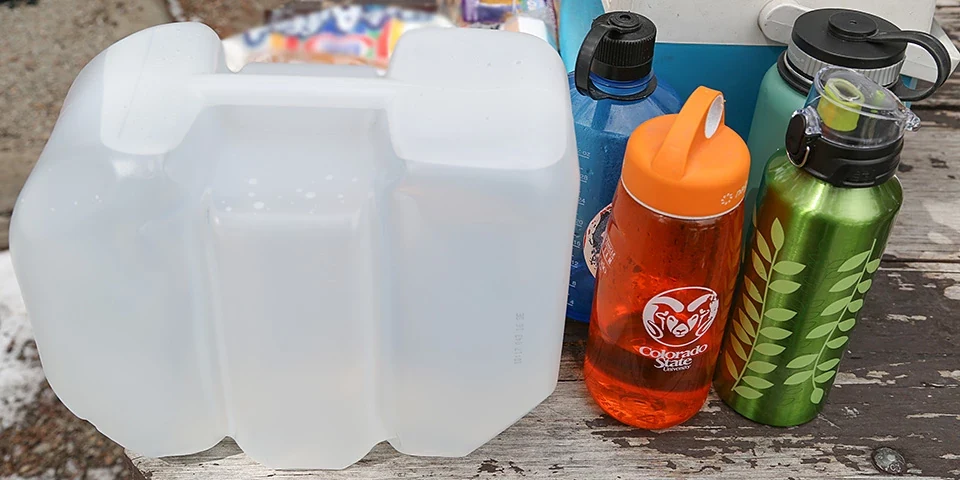
Plan for the whole group and the whole trip: drinking, cooking, handwashing, and cleaning. Add capacity for delays or a failed refill plan. Weather and activity change demand, so avoid treating one generic quantity as a guarantee for every outing.
Use food-grade containers intended for drinking water. Never repurpose a container that held fuel, pesticides, or another toxic substance. Clean and sanitize containers using appropriate instructions before filling them. Keep lids closed and protect openings from dirty hands and utensils. A spigot helps you dispense water without dipping a cup inside. CDC safe water storage
Choose sizes you can lift when full. Two manageable containers may be easier to use than one enormous jug. Test caps and taps for leaks at home, secure the containers during travel, and keep drinking water clearly separate from graywater and untreated water.
A refillable bottle for each person makes daily use easier. Keep the main supply where it can be reached without unloading the vehicle.
If you will depend on natural water sources, build a separate treatment plan. Carrying water and making it microbiologically safer are different jobs. See the full camping gear guide.